
Part II. First Workflow · 2 min read
Your First AutoML Model
Train a first AutoML model in Python, inspect the output, and understand what the generated report tells you.
The first AutoML run should be small, clear, and easy to inspect. The goal is not maximum score. The goal is to see the whole workflow end to end.
Start with a clean dataset
For a first experiment, choose a tabular dataset with:
- one clearly defined target column
- a manageable number of rows
- a mix of numeric or categorical features you can explain
Keep the first run simple enough that you can inspect every output.
Launch the training run
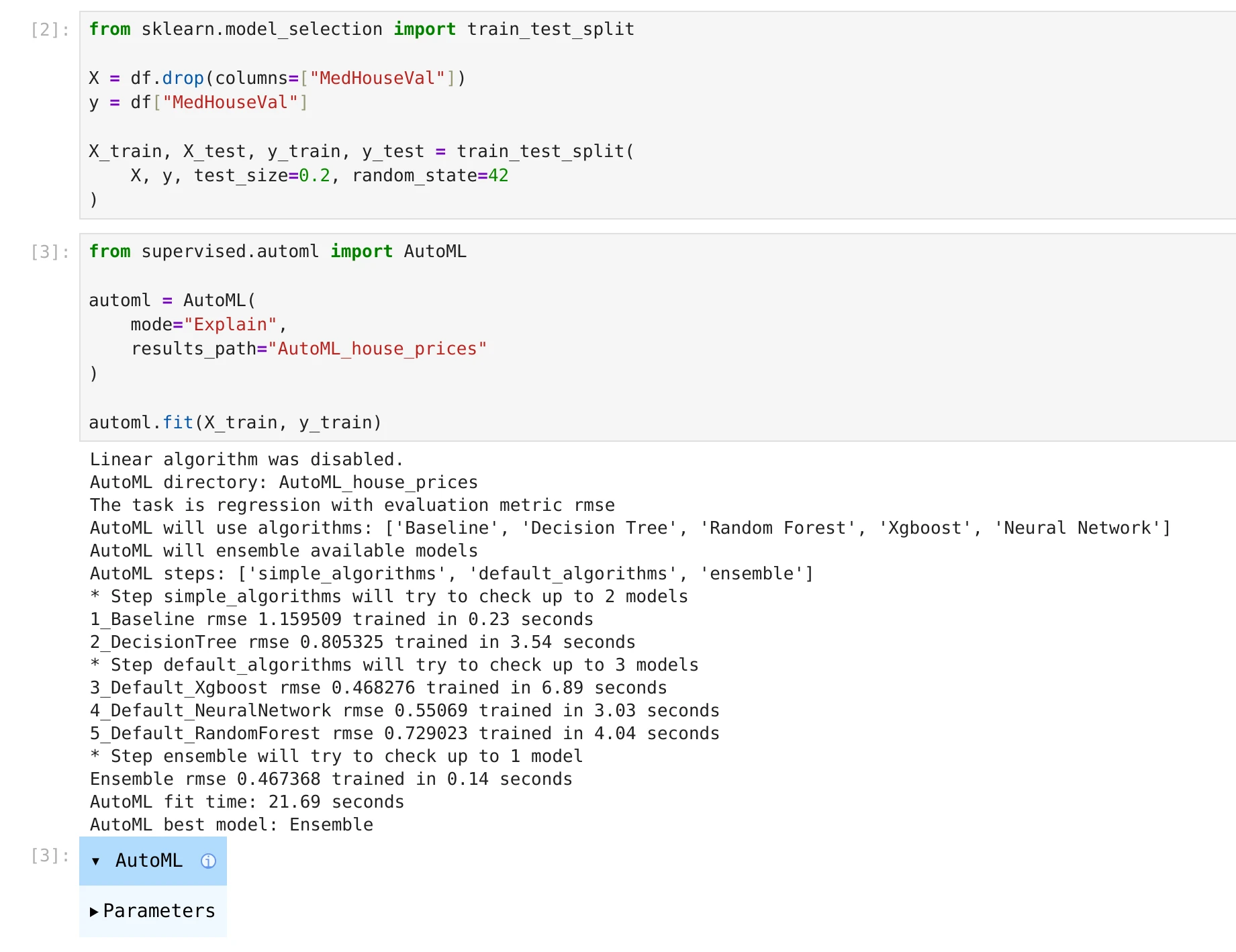
With mljar-supervised, a minimal workflow looks like this:
from supervised import AutoML

automl = AutoML(mode="Explain")
automl.fit(X_train, y_train)
That one call triggers the training workflow, but the useful part comes after training: inspecting what was produced.
Read the generated outputs
After the run finishes, inspect:
- leaderboard results
- model-by-model metrics
- feature importance
- saved report artifacts
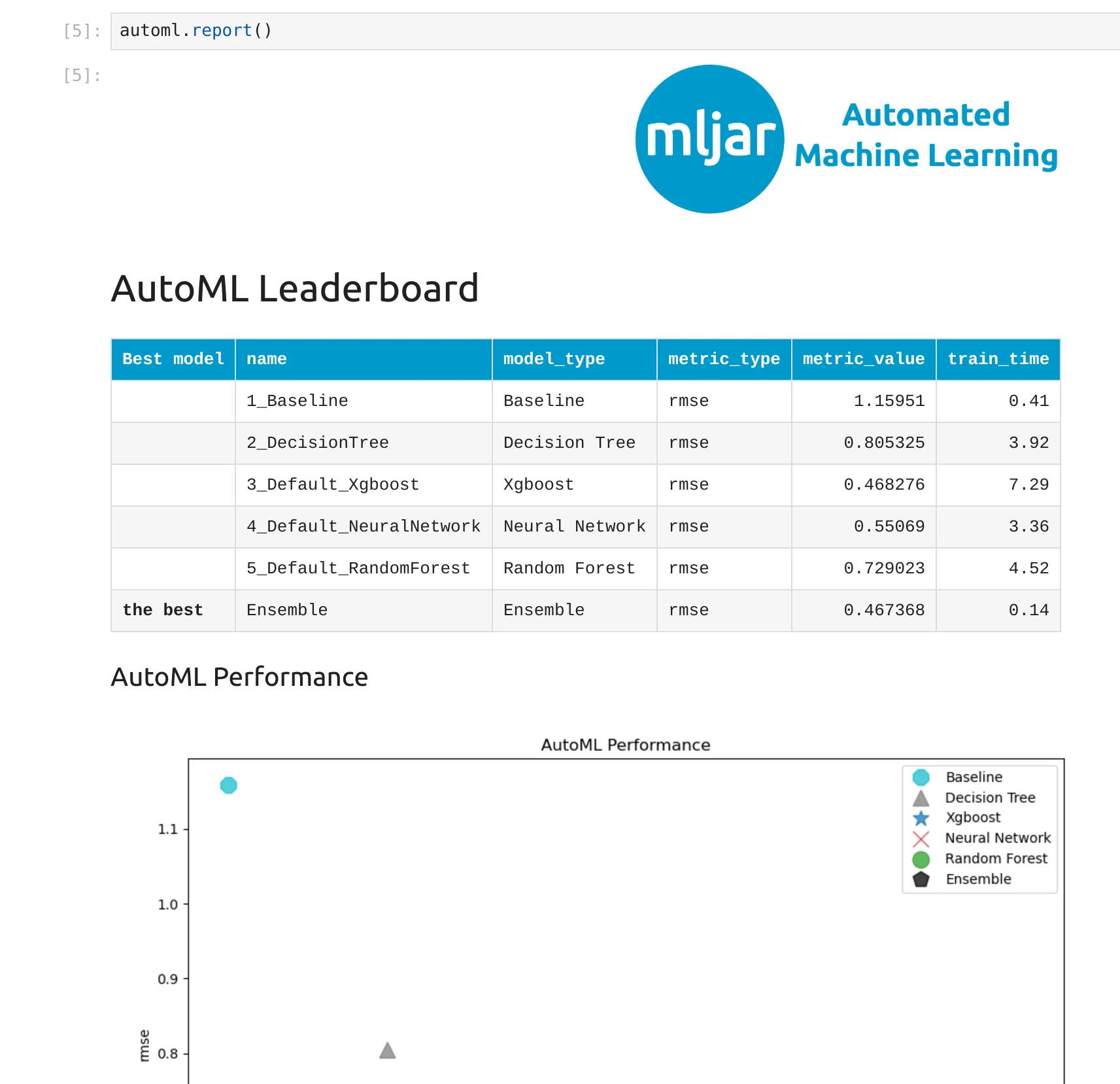
These outputs help answer practical questions:
- Which model performed best?
- How large was the gap between top models?
- Which features influenced the prediction most?
- Is the result strong enough to justify another iteration?
What to do after the first run
Your first AutoML model is a baseline, not the final answer. The next iteration usually focuses on one of four things:
Improve the data
Better target definition, better cleaning, and better feature construction often matter more than another round of blind hyperparameter search.
Adjust the validation
If the validation scheme does not match reality, the score can look better than the actual future performance.
Compare explanation depth
Different AutoML modes trade off speed and explainability. Choose the mode that fits the current stage of the project.
Tighten the objective
Sometimes the real improvement is not a better algorithm. It is a better metric, a better threshold, or a better understanding of business cost.
This is the point where AutoML becomes practical: not when it gives you a number, but when it gives you a structured starting point for the next decision.
Get notified about new chapters
Subscribe via a short Google Form and we will let you know when new book chapters are published.
Open subscribe form